What heavy training does to your muscles
Strength training is built on putting muscles under load and letting them recover. When the load goes up fast, after a new programme, a high-volume week or a long break, the result is often delayed onset muscle soreness (DOMS): stiffness and soreness that peak a day or two after the session.
Beyond soreness, lifting tends to leave the same areas tight. Hip flexors, adductors and glutes limit squat depth. Lats, chest and the upper back limit overhead work and pressing. Forearms and grip take a lot of load in deadlifts and pulling. When these areas stay tight for weeks, technique starts to change and other muscles take over.
How massage can help people who lift
- Eases soreness and stiffness after hard sessions, so the next one feels more comfortable
- Hips and adductors — for a deeper, more comfortable squat and better position in the deadlift
- Upper back, lats and chest — for overhead pressing, pull-ups and bench work
- Forearms and grip — useful after heavy pulling or a lot of hanging work
- Lower back and glutes — common areas of tightness in people who squat and deadlift
What a session looks like
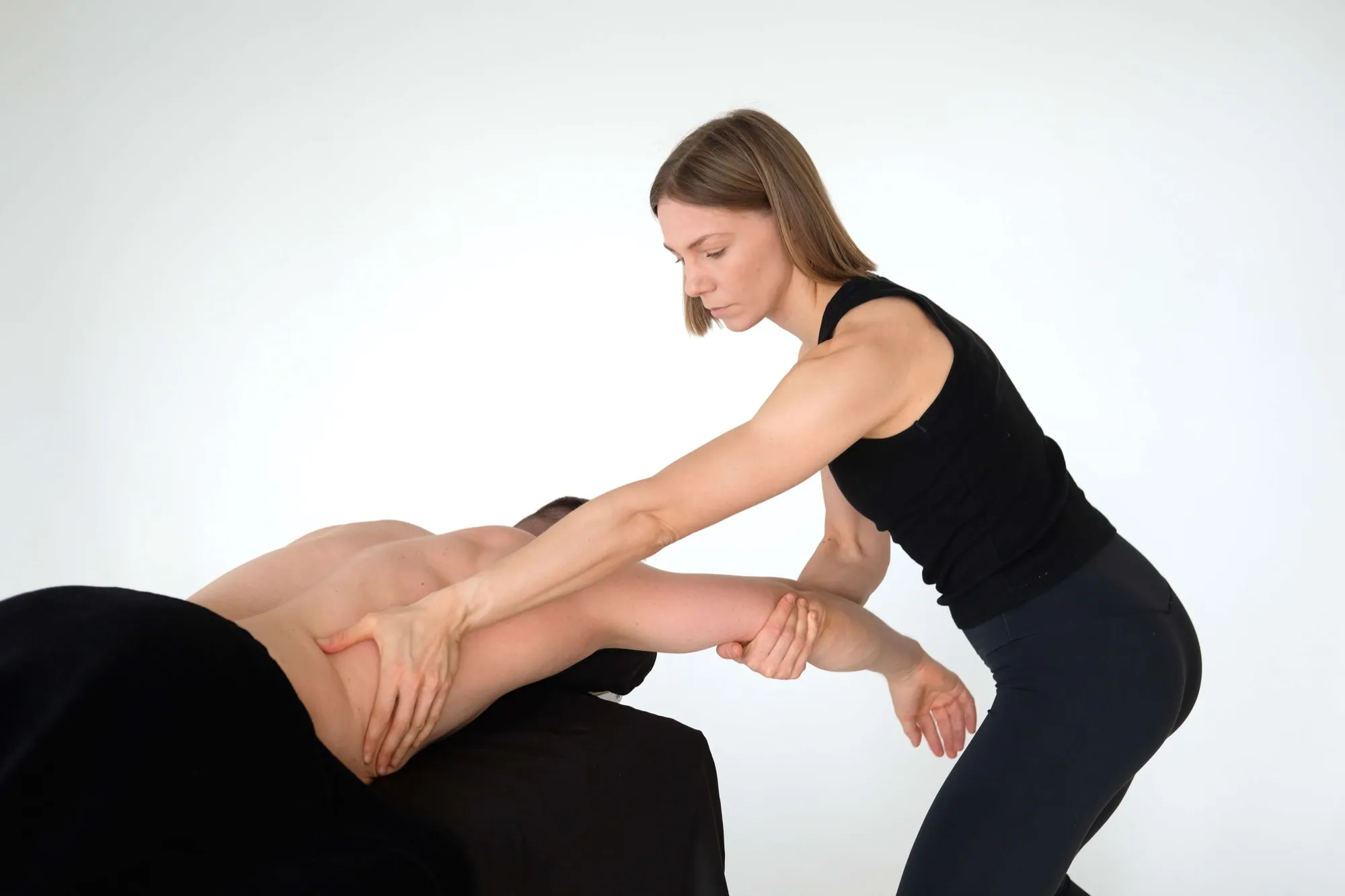
My base is sport massage: deep tissue work, myofascial release, compressions and assisted stretching. On dense areas such as the quads, glutes or upper back, IASTM or a percussion massage gun can help. If you do a lot of overhead and bench work, a Shoulders Mobility session focuses on the back, chest, rotator cuff and neck.
Tell me what you train and which lifts feel restricted. If your squat is the problem, I will spend more time on the hips; if it is the overhead press, on the upper back and chest.
Timing around your programme
- Deload weeks — a good time for a deeper session, because the training load is lower and the body has time to adapt
- After a heavy leg or back day — wait a day, then book
- Before a max attempt or competition — the last deeper session several days earlier
For regular training, once or twice a month works well for many people. During a hard training block, more often is possible.
When to see a doctor or physiotherapist first
Please get checked before booking if you:
- felt a sudden sharp pain, pop or tear during a lift
- have swelling or bruising after a session
- have numbness, tingling or weakness in the arms or legs
- have back pain that spreads into the leg
Massage should not be painful. Deep work can feel intense, but you can always ask me to change the pressure.