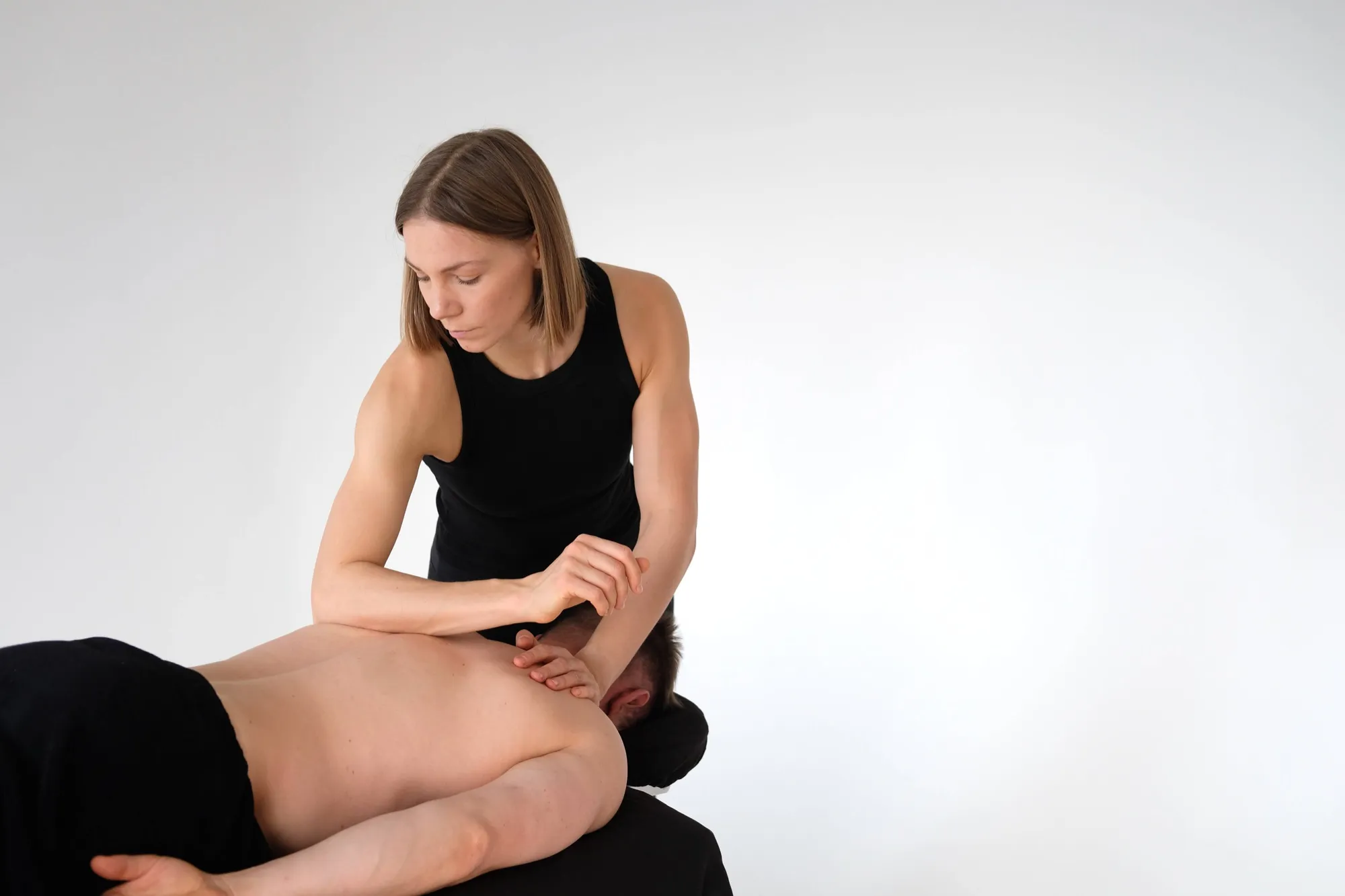
Where neck and shoulder tension comes from
The neck carries the weight of the head all day, and the shoulders hold up the arms. When the head moves forward over a screen or phone, the muscles at the back of the neck and across the top of the shoulders have to work much harder to hold it. Stress adds to this: many of us lift the shoulders and clench the jaw without noticing. Training plays a part too, especially pressing, pulling, swimming and long rides on a bike.
The result is often a familiar picture: a neck that is hard to turn, a burning or aching spot between the shoulder blades, tightness at the base of the skull and sometimes a headache that starts at the back of the head.
How massage can help
- Releases tight muscles at the top of the shoulders, along the neck and at the base of the skull
- Eases the spot between the shoulder blades, which often feels tired and overstretched rather than short
- Opens the chest, so the shoulders are not pulled forward and the neck has less to hold
- Helps you let go of stress, which is often what keeps the shoulders lifted in the first place
What a session looks like
I start by asking where you feel it, when it is worse and whether turning or tilting your head is limited. Then I check how your neck and shoulders move.
For stubborn tension I usually choose sport massage, with deep tissue work, myofascial release and trigger point therapy for those tight, tender spots that can send pain up into the head. If your shoulders feel rounded and stuck, the Shoulders Mobility session is designed for this: it focuses on the back, shoulder blades, chest, diaphragm, rotator cuff and neck in one hour. If you mainly need to unwind, a classic massage is the gentler option.
The neck is a sensitive area, so I work carefully there and check in with you about the pressure. Massage should not be painful.
If your neck and shoulders get tight from long days at a computer, read more about massage for office workers.
When to see a doctor first
Please see a doctor before booking if your neck pain:
- started after a fall, accident or sudden jolt, such as a car accident
- comes with numbness, tingling or weakness in the arms or hands
- comes with dizziness, problems with vision or speech, or a sudden, severe headache
- comes with fever and a stiff neck that makes it hard to bend your head forward
If you have had neck or shoulder surgery, let me know when you book, and bring any advice from your doctor or physiotherapist.