What trigger points are
Most people call them knots. They are small, tight spots inside a muscle that feel tender when pressed. What makes them different from general tightness is that they can cause referred pain: you feel it somewhere other than where the knot is.
Some common examples:
- Upper trapezius (between the neck and shoulder) can refer pain to the side of the head and cause tension headaches
- Glutes can refer pain down the back of the thigh or into the lower back
- Shoulder blade muscles can refer pain into the arm
Not everything about trigger points is fully understood, and the research is mixed. In practice, though, pressing the right spot often reproduces exactly the pain a person knows, and easing it often brings relief.
How it works in the session
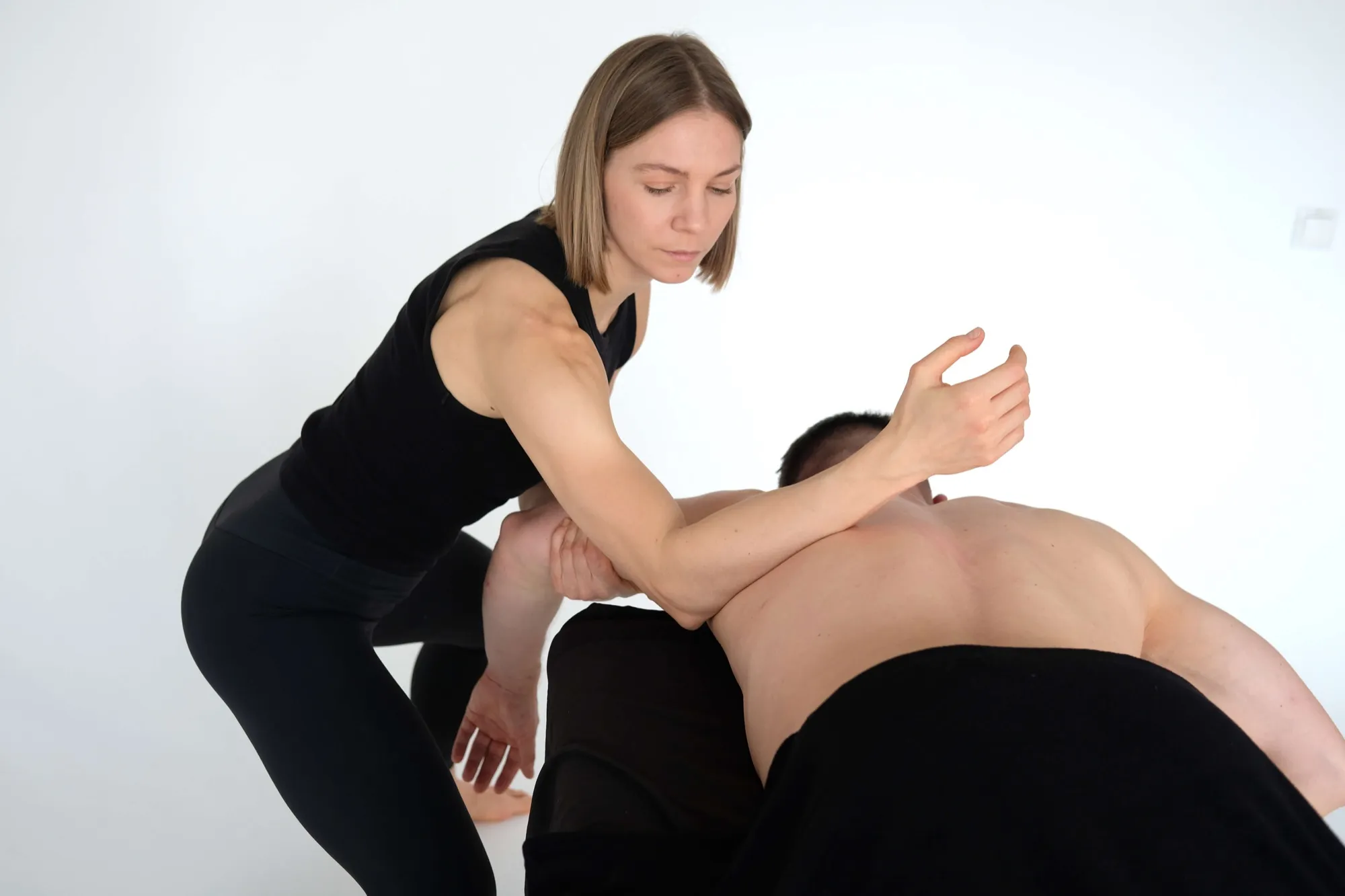
I find the point, then apply steady pressure with a thumb, finger or elbow and hold it, usually for thirty seconds to a minute and a half. You will often feel the tenderness or the referred pain fade during the hold. After that I massage and stretch the muscle so it can relax.
The “good pain” scale
This is the technique where communication matters most. I will ask you for a number from 0 to 10:
- Below 5: usually too light to make a change
- 5 to 7: the right zone, intense but you can breathe and stay relaxed
- Above 7: too much, your body will tense up and fight the pressure
You are always in control. Say “less” and I will ease off straight away. Massage should not be painful, and good trigger point work does not need to be.
How I use it
Trigger point therapy is part of a sport massage and is not booked separately. I use it where you have a clear knot, often in neck and shoulder pain, back pain and tension from desk work. I combine it with myofascial release on the surrounding tissue. In a classic massage I can use it gently on one or two spots if you ask.
Aftercare
- The spot may feel a little tender for a day, like after a workout
- Gentle movement and stretching of the area help
- Notice what brings the knot back, such as posture, stress or training, and tell me next time
When to tell me first
Please mention before the session if you have:
- headaches that are new, sudden or very severe, or come with dizziness or vision changes; see a doctor first
- numbness, tingling or weakness in the arms or legs
- blood thinners or a tendency to bruise easily
- a recent injury or an area that is swollen or inflamed