What running does to your legs
Every stride lands with a load several times your body weight, and your calves, Achilles area, quads and hamstrings absorb it again and again. Add long runs, hills, speed sessions or a sudden jump in weekly distance, and the legs start to feel heavy and tight. The outer thigh and hip often take extra load, which many runners feel as tightness around the IT band or knee. The feet, especially the arch and the base of the toes, can get tired as well.
Hips matter too. If the glutes and hip flexors are stiff, the stride shortens and other muscles have to compensate. That is why I never look at the legs alone.
How massage can help runners
- Calves and Achilles area — reducing tightness that can make the first kilometres feel stiff
- Hamstrings and quads — easing the heaviness after long runs and hill work
- Outer hip and thigh — working on the glutes and the muscles around the IT band, not grinding on the band itself
- Hip flexors and lower back — helping you move freely and keep a longer stride
- Feet — releasing the arch and the small muscles that work in every step
What a session looks like
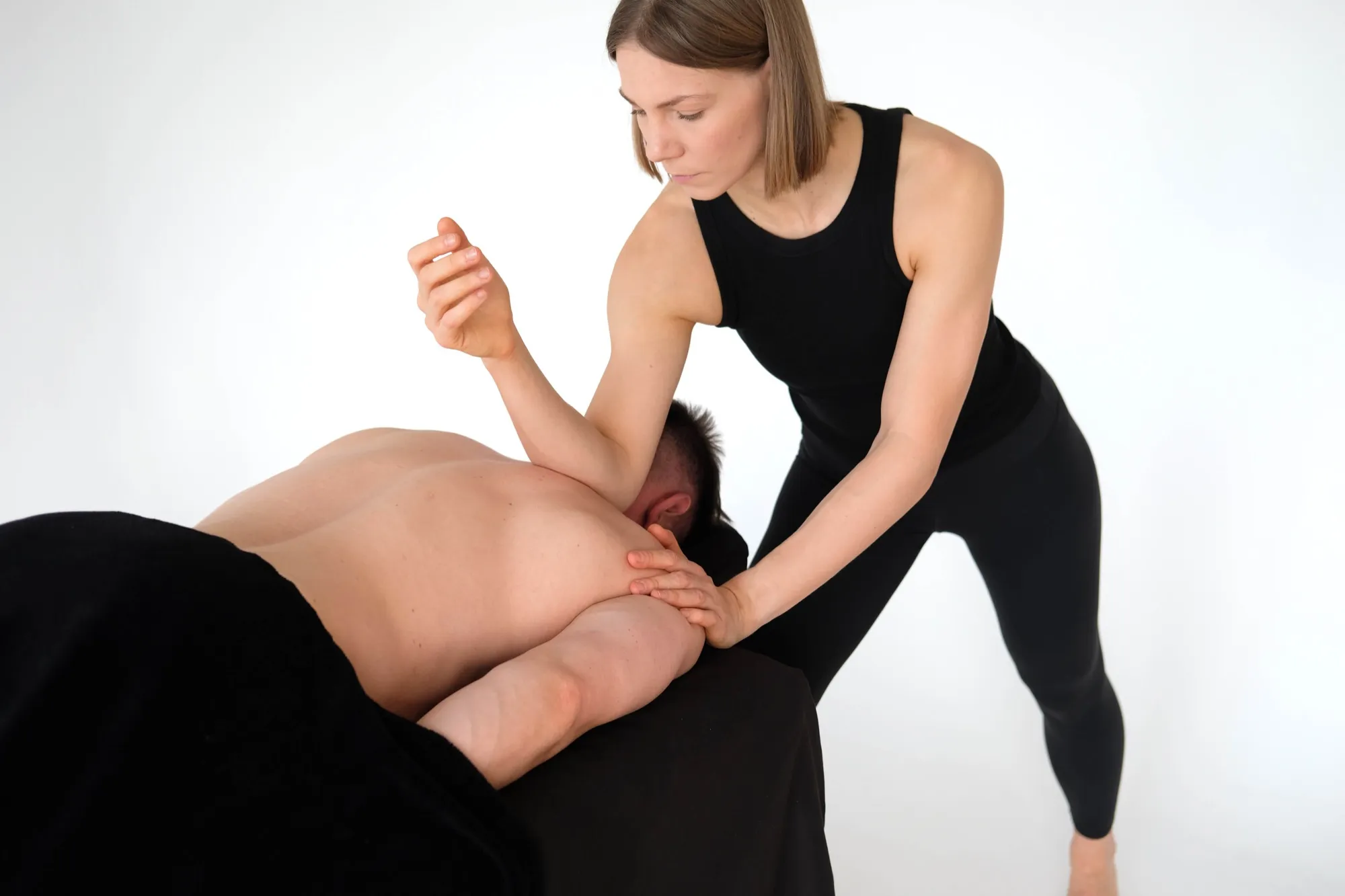
I use sport massage as the base: deep tissue work, myofascial release, compressions and stretching. For stubborn calves or quads, cupping or IASTM can be useful. If you want support for a hard-working area between sessions, I can add Dynamic Tape, for example around the calf or knee.
A 60-minute session usually covers both legs and the hips. If you also want work on the back and feet, 90 minutes gives us time to do it properly.
Timing around long runs and races
Deep work the day before a key session or race can leave your legs feeling flat. My general approach:
- After a long run — wait a day, then book a recovery session
- Before a race — the last deeper massage four to seven days out
- After a race — give it two or three days, then a gentler session to help you get moving again
The Tallinn Marathon takes place in September. If you are running it, plan a few sessions during the summer build-up and one in the week or two after the race.
When to see a doctor or physiotherapist first
Massage is for tired, tight muscles. Please get checked before booking if you have:
- sharp pain in one specific spot of a bone, for example the shin or foot, that gets worse with every run
- sudden pain in the calf or Achilles during a run, with swelling or bruising
- a knee that swells, locks or gives way
- numbness or tingling in the leg or foot
If you are coming back from an injury, tell me when you book and bring any advice from your physiotherapist.