What fascia is
Fascia is the connective tissue that wraps around and runs through every muscle. When it is healthy, layers of muscle slide over each other easily. After long hours in one position, repetitive training or an old injury, it can become less elastic, and the area feels stiff or “glued”, even when the muscle itself is not very tight.
What myofascial release is
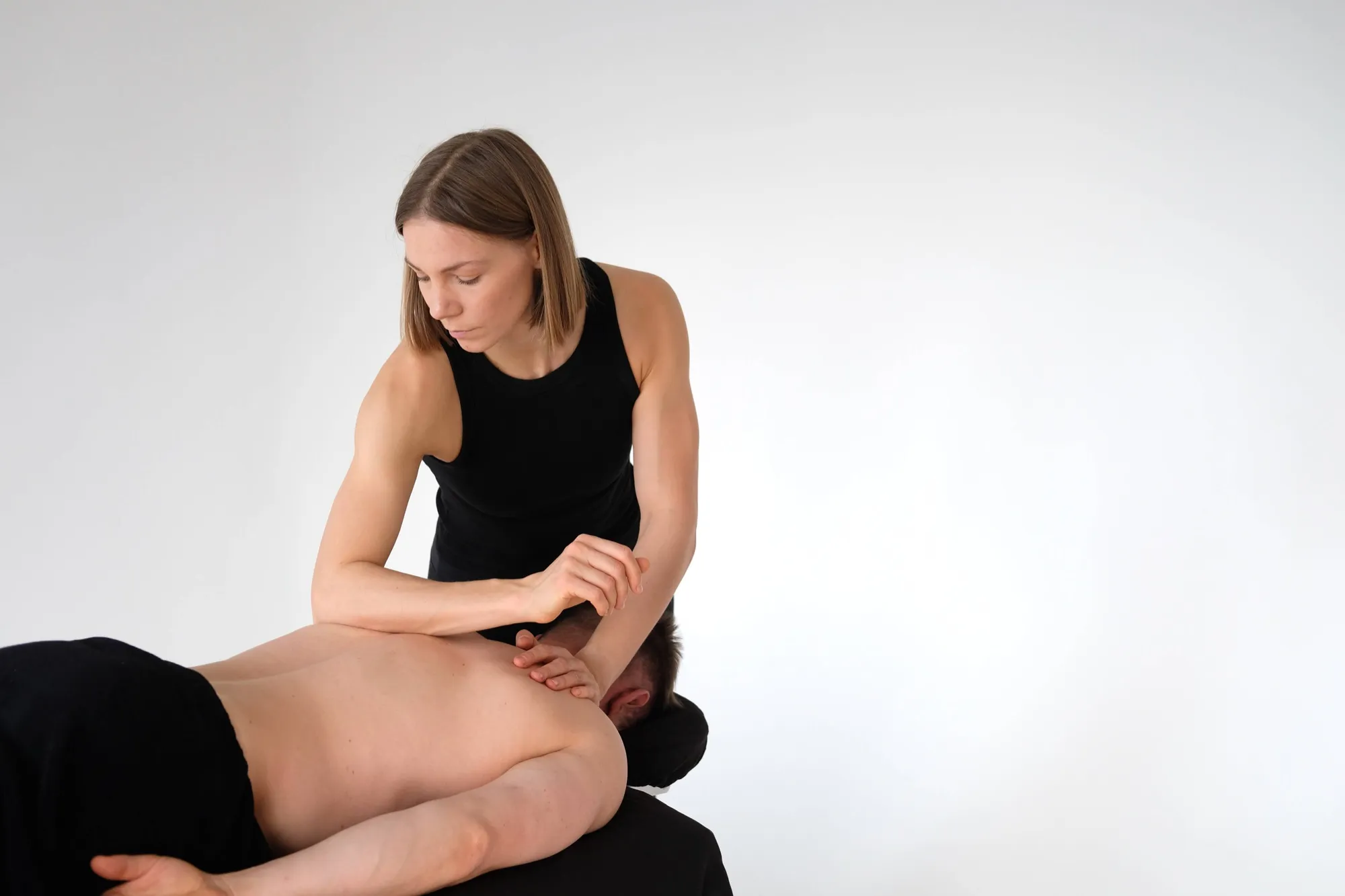
Instead of fast strokes, I apply slow, sustained pressure and a gentle stretch to the tissue, and hold it. After a short while, usually somewhere between thirty seconds and a couple of minutes, the tissue starts to soften and I follow it as it releases. Then I move on to the next spot.
Researchers still discuss what exactly happens in the tissue, and the evidence is not clear-cut. Many people, though, find this kind of work helpful for stiffness and movement, and it is one of the techniques I use most often.
How it feels
- Slow and quiet. There is not much movement; you will feel steady pressure and stretch.
- Deep but not sharp. Some spots can feel intense or warm as they release.
- Sometimes far-reaching. Holding an area in the lower back can be felt up in the shoulder blade, because fascia is connected.
What it can help with
- Stiffness from sitting, in the chest, hip flexors and upper back, common in office workers
- Restricted shoulders and neck, see neck and shoulder pain
- Tight areas after training that do not respond to regular massage
- Better range of motion before or between training blocks
How I use it in a session
Myofascial release is part of every sport massage and is not booked on its own. I often start with it before deeper work, so the area is prepared. It is also a big part of the shoulder mobility session, where I work on the chest, shoulder blades and neck. For very local knots I may combine it with trigger point therapy.
Aftercare
- Move gently afterwards so your body gets used to the new range
- Drink water and avoid sitting still for hours straight after the session
- Some mild tenderness the next day is possible and usually passes quickly
When to tell me first
Let me know before the session if you have:
- a recent injury, surgery or an area that is swollen or hot
- a skin problem, open wound or fresh scar in the area
- blood thinners or a condition that affects your blood vessels
- pregnancy, or any condition you are being treated for
If you are recovering from an injury, bring any advice from your doctor or physiotherapist.